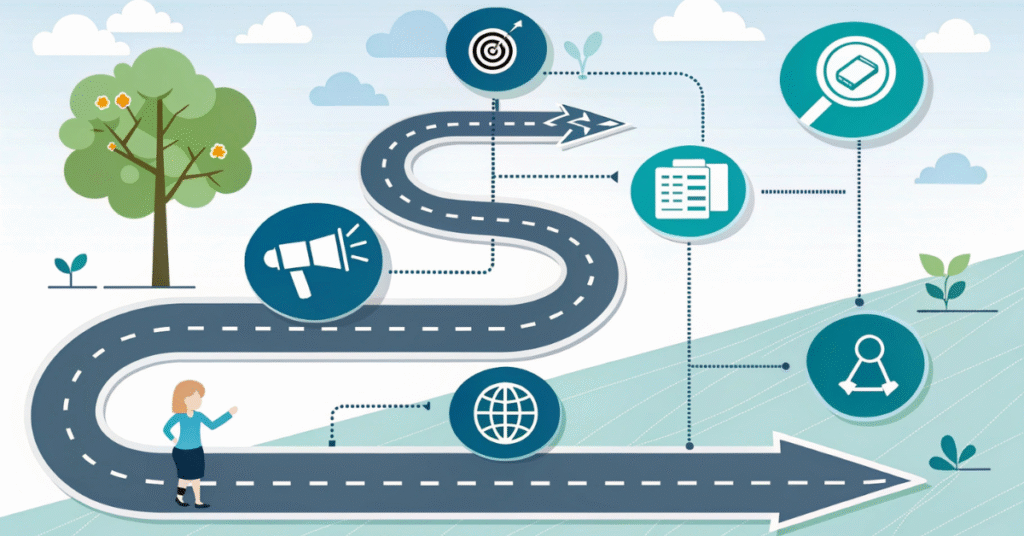
A successful digital marketing plan is more than a strategy—it’s the roadmap that helps businesses grow, compete, and attract the right audience in a crowded online world. When we create a structured, well-researched, and actionable plan, it becomes easier to track progress, optimize campaigns, and achieve long-term business goals. Below is a complete, step-by-step guide that walks you through each phase of building an effective and result-oriented digital marketing plan.
Understanding the Purpose of a Digital Marketing Plan
A digital marketing plan outlines the exact actions we take to promote a business across various online channels such as social media, search engines, email, paid advertising, and content marketing. Its purpose is to ensure consistency, eliminate guesswork, and help brands focus on methods that bring measurable results.
With a solid plan in place, we can align marketing efforts with business goals, allocate budgets wisely, and ensure every campaign is optimized for maximum ROI.
Step 1: Define Your Business Goals Clearly
Every successful marketing strategy begins with clear and realistic goals. These goals must align with the overall direction of the company.
Ask key questions such as:
-
What do we want to achieve in the next 3, 6, or 12 months?
-
Are we aiming to increase sales, website traffic, leads, or brand awareness?
-
Do we want to enter new markets or expand existing ones?
We typically use the SMART goal framework:
-
Specific
-
Measurable
-
Achievable
-
Relevant
-
Time-bound
Instead of saying “increase traffic,” a better goal is:
“Increase organic website traffic by 35% within six months.”
Step 2: Understand Your Target Audience
To build a strong digital presence, we need to know exactly who we are talking to.
We create detailed audience personas including:
-
Age and demographics
-
Location
-
Professional background
-
Interests and buying behavior
-
Pain points and challenges
-
Online platforms they use most
Understanding the audience allows us to craft messages that resonate and create campaigns that attract attention and action. The more precise the audience profiling, the easier it becomes to choose the right channels and content formats.
Step 3: Analyze Competitors and Market Trends
A powerful digital marketing plan is grounded in data—and competitor analysis provides valuable insight into what works in your niche.
We examine:
-
Competitor websites
-
SEO performance
-
Content quality and frequency
-
Paid advertising strategies
-
Social media engagement
-
Customer reviews and feedback
Tools like SEMrush, Ahrefs, and SimilarWeb help uncover keywords, backlinks, and traffic sources competitors rely on. This analysis allows us to identify opportunities and strategies that give our brand a competitive edge.
Step 4: Establish a Strong Digital Marketing Budget
Budgeting is a crucial part of planning. A proper budget ensures we allocate funds to channels that are most likely to deliver outstanding results.
Our digital marketing budget may include:
-
SEO and content marketing
-
Paid ads (Google Ads, Facebook Ads, Instagram Ads)
-
Social media management
-
Email marketing
-
Software tools and automation platforms
-
Influencer marketing
-
Website optimization
We always recommend setting aside a portion of the budget for testing new ideas and campaigns. This approach ensures continuous improvement and innovation.
Step 5: Choose the Best Digital Marketing Channels
A successful plan combines multiple channels that work together to reach the right audience at the right time. Below are the key digital marketing channels we focus on.
Search Engine Optimization (SEO)
SEO ensures long-term organic visibility. We create keyword-optimized content, improve technical performance, and build high-quality backlinks to increase rankings and drive free, targeted traffic.
Content Marketing
High-value content builds trust and engages users. Blogs, infographics, videos, and case studies help educate and convert visitors.
Social Media Marketing
Platforms like Facebook, Instagram, LinkedIn, and YouTube help us build brand awareness, generate leads, and maintain strong customer relationships.
Email Marketing
Email remains one of the most profitable marketing channels. With personalized emails, newsletters, and automation sequences, we nurture leads and encourage repeat purchases.
Pay-Per-Click Advertising (PPC)
Platform such as Google Ads and Meta Ads provide instant visibility and fast results, especially for competitive industries.
Influencer and Affiliate Marketing
These strategies help amplify reach by leveraging the trust and authority of established content creators.
Step 6: Create High-Quality, SEO-Optimized Content
Content is at the center of every digital marketing plan. We develop a strong content strategy that includes:
-
Keyword-rich articles
-
Industry guides and tutorials
-
Video content
-
Social media posts
-
Infographics
-
Lead magnets and eBooks
Each piece of content should be crafted to educate, engage, and encourage the reader to take the next step. High-quality content also improves SEO, drives conversions, and increases brand authority.
Step 7: Build Conversion-Focused Landing Pages
Even with the best marketing strategy, conversions won’t happen if the landing pages are weak. We design landing pages that include:
-
Clear and compelling headlines
-
Strong calls-to-action
-
Social proof and testimonials
-
Fast loading speed
-
Mobile responsiveness
-
Minimal distractions
A good landing page ensures that every click has the potential to become a conversion.
Step 8: Implement Marketing Automation
Automation helps streamline repetitive tasks and ensures consistent communication. We use automation tools to:
-
Schedule social media posts
-
Send automated email sequences
-
Retarget website visitors
-
Nurture leads through the sales funnel
By automating these processes, we save time and enhance customer experience.
Step 9: Track Performance with Analytics
No digital marketing plan is complete without tracking and optimizing performance. Using tools such as Google Analytics, Google Search Console, Meta Pixel, and HubSpot, we monitor:
-
Website traffic
-
User behavior
-
Conversion rates
-
Keyword rankings
-
Social media engagement
-
Ad campaign performance
We analyze the data regularly and make adjustments to improve ROI and overall campaign efficiency.
Step 10: Continuously Optimize and Improve
Digital marketing is not a one-time task—it requires ongoing testing and optimization. We regularly update content, refine ad strategies, test different CTAs, and experiment with new platforms. Continuous improvement ensures we stay relevant, competitive, and impactful.
Creating a successful digital marketing plan requires a strategic approach, thorough research, consistent execution, and ongoing optimization. When done right, it helps businesses achieve stronger visibility, generate quality leads, and build a loyal customer base.